
Extraordinary Women, Extraordinary Work
Lucille Lewin is a woman with the sort of drive that make most of us exhausted just thinking of her achievements.
She and her husband, Rick Lewin, founded the Whistles chain of stores that sold up to the minute wearable clothes and accessories ‘democratically priced’ she says; linking the High Street with more upmarket, pricier, brands. The sort of things that made you feel special and people would ask ‘where did you buy that, it looks fabulous?”
Lucille was the creative director, Rick was the business man.
The Lewins came from South Africa. She had studied there and, when Rick was accepted at Harvard, they moved to Boston where, after graduating, he pursued several successful business ventures. During this time Lucille enrolled at the Boston School of Fine Art, but soon they were on the go again and she only completed half a year of her course. They settled in London, where the political climate seemed a better place for two idealistic political nomads.
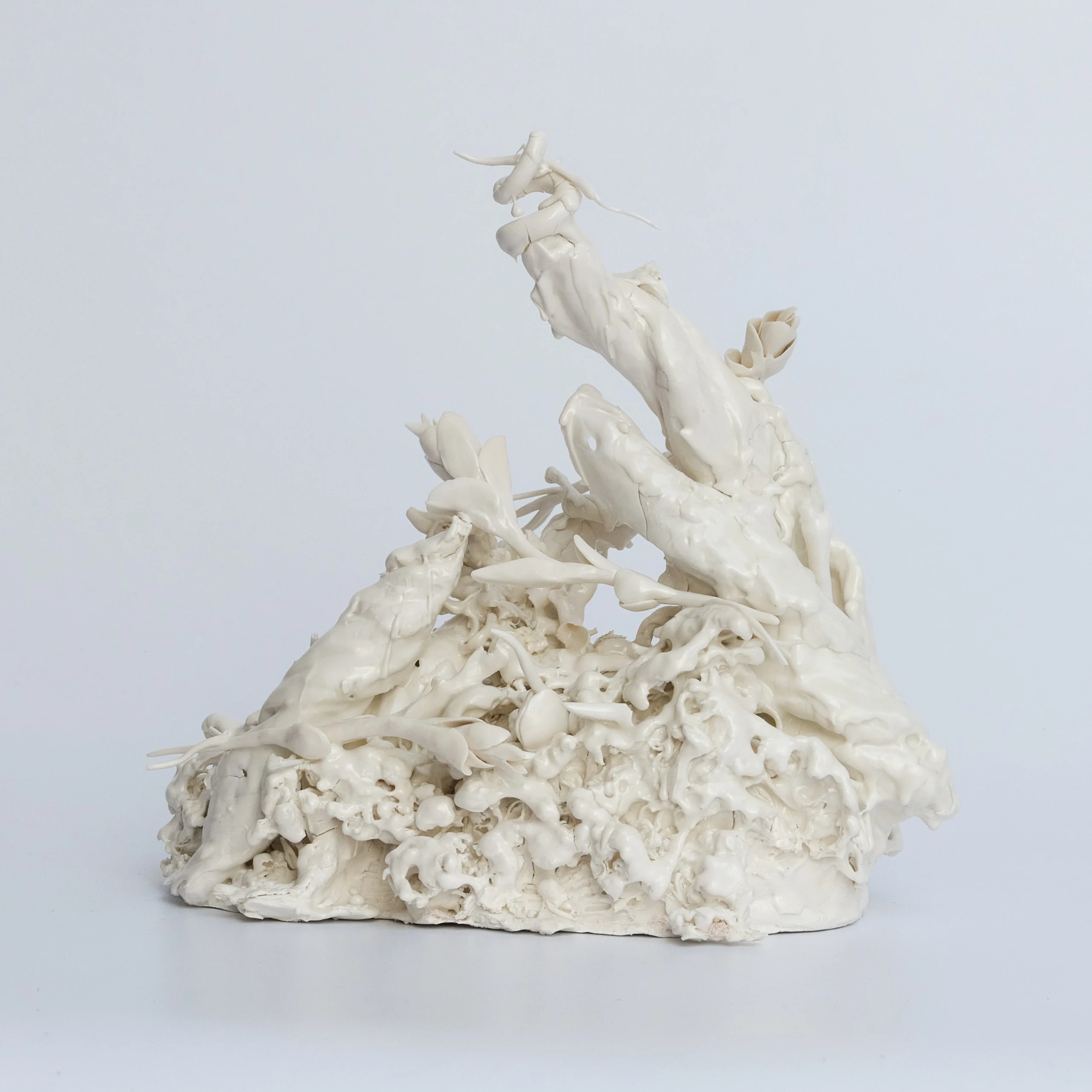
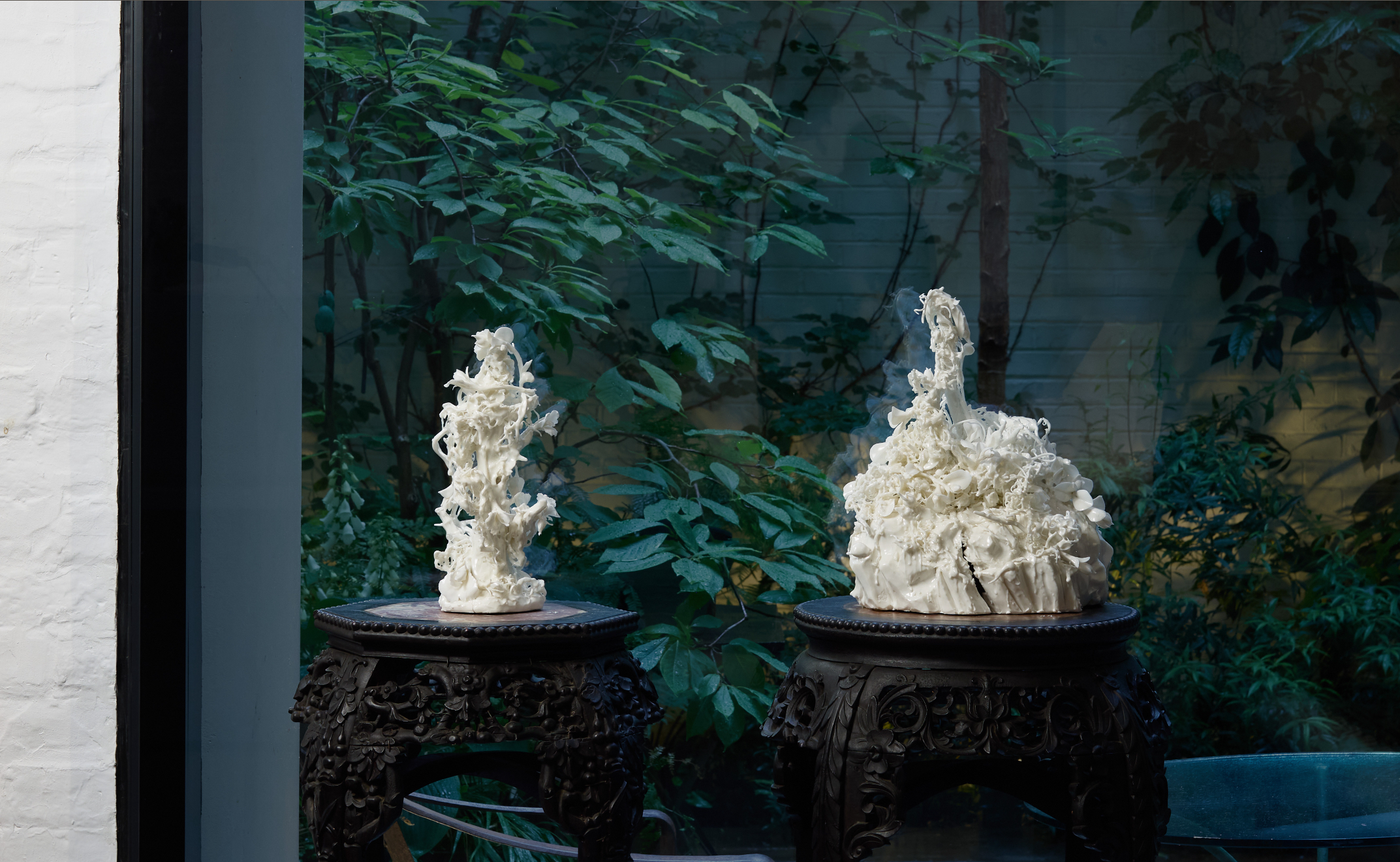
LUCILLE LEWIN: Ambiguous Intervention V, 2025
They opened the first tiny Whistles shop in the early 1990s and, at the same time, rented (and later bought), a warehouse on the corner of Chiltern Street in Marylebone – then a definite ‘no no’ for anything to do with fashion. The warehouse was both a showroom and used for the production of their clothes: everything was cut and designed in-house. When the company was taken over in 2000, Lucille was asked to join Liberty as Creative Director, but the department store environment, even one as individual as Liberty, wasn’t fulfilling and lacked the creative freedom which led her to take up ceramics in a serious way. She had always been interested but, with a demanding career and a family to bring up, it remained dream for ‘one day’. Then ‘one day’ came and instead of opting for a more relaxing life, lunching with friends, visiting galleries and similar activities, Lucille had itchy feet. She collected ceramics for her home, with no intention of making them. The Lewins’ warehouse was converted into a vast home with a charming enclosed courtyard, which also enables her to show her own bigger pieces in an outside setting in addition to those she has collected. Plants and flowers flourish and Lucille is a keen gardener with a very visual approach. Colour matters.
So how did a career as a ceramicist enter her life? Most unexpectedly.
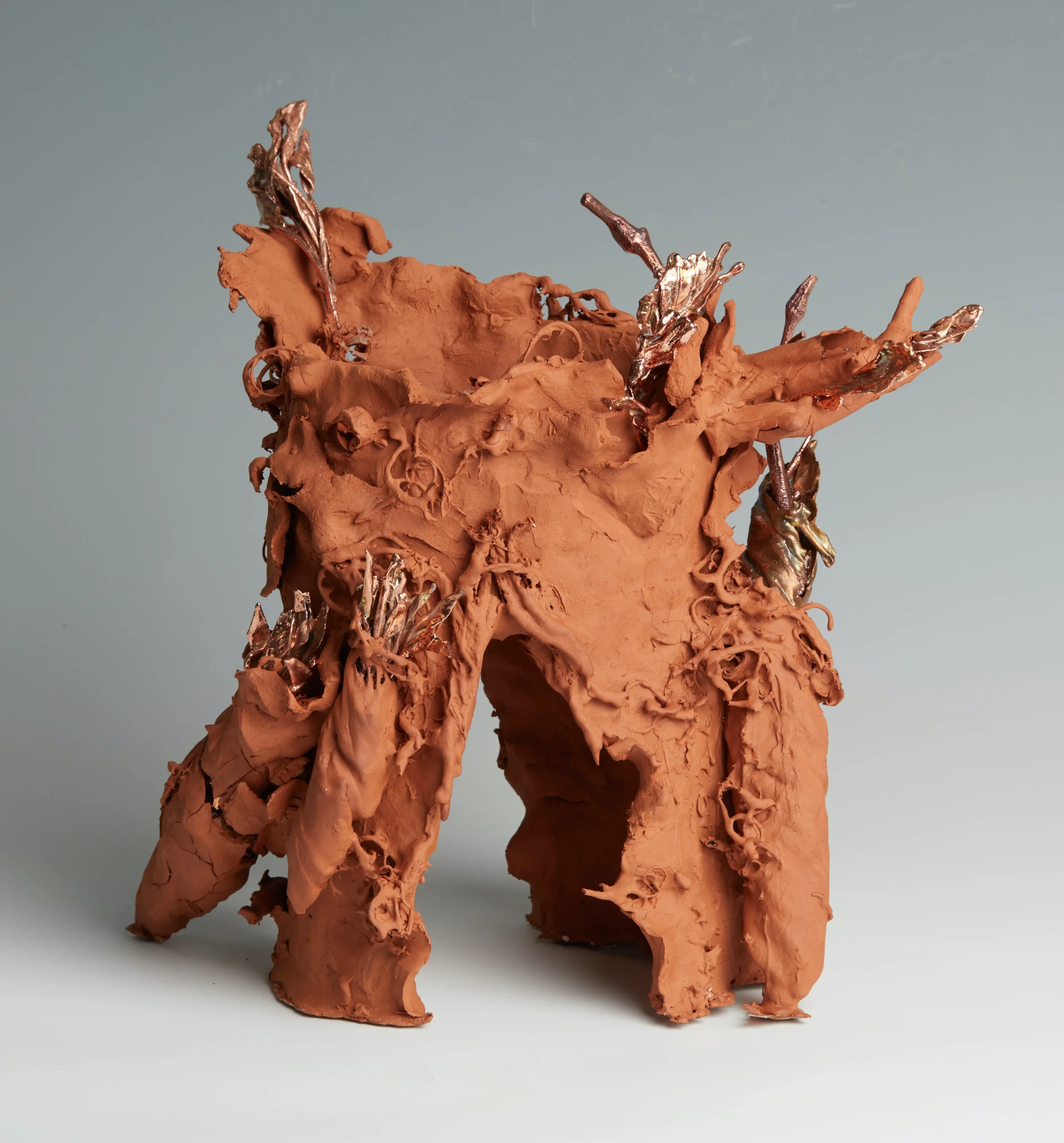
LUCILLE LEWIN: Eccentrics Folly, 2023
Her friend Caroline Bernstein (then a directer of Browns—at the time, the leading fashion retailer in London) was driving her home and said she was going to her pottery class and suggested she come and observe. According to Lucille, ‘the smell of clay hit her like falling in love’. She was smitten. The pottery instructor, seeing her sitting in a corner looking around with curiosity, threw her a small lump of clay and asked her to do something with it. Instinctively, she pressed her thumb into the ball of clay and a little pot was made – still used in her kitchen today for salt.
From small beginnings, as they say…
To see the crowd on opening night enthusiastically praising her work and purchasing was a testament of what can be achieved with passionate self-belief and, of course, talent.
Lucille studied at City LIT, the most outstanding student in the class, so much so that she applied and was accepted by the Royal College of Art, even without the traditional background qualifications. A residency in Dehua, China, inspired her sculptures for the exhibition Blanc de Chine: A Continuous Conversation, at the V&A in 2019.
Lucille’s work is found in top galleries, bought by collectors and now it isn’t labelled ‘craft’ – it’s sculpture, using mixed materials combining clay, glass, and metals. Wall pieces and large scale outdoor work. Her collectors come from all over the world and TheEye knows why.
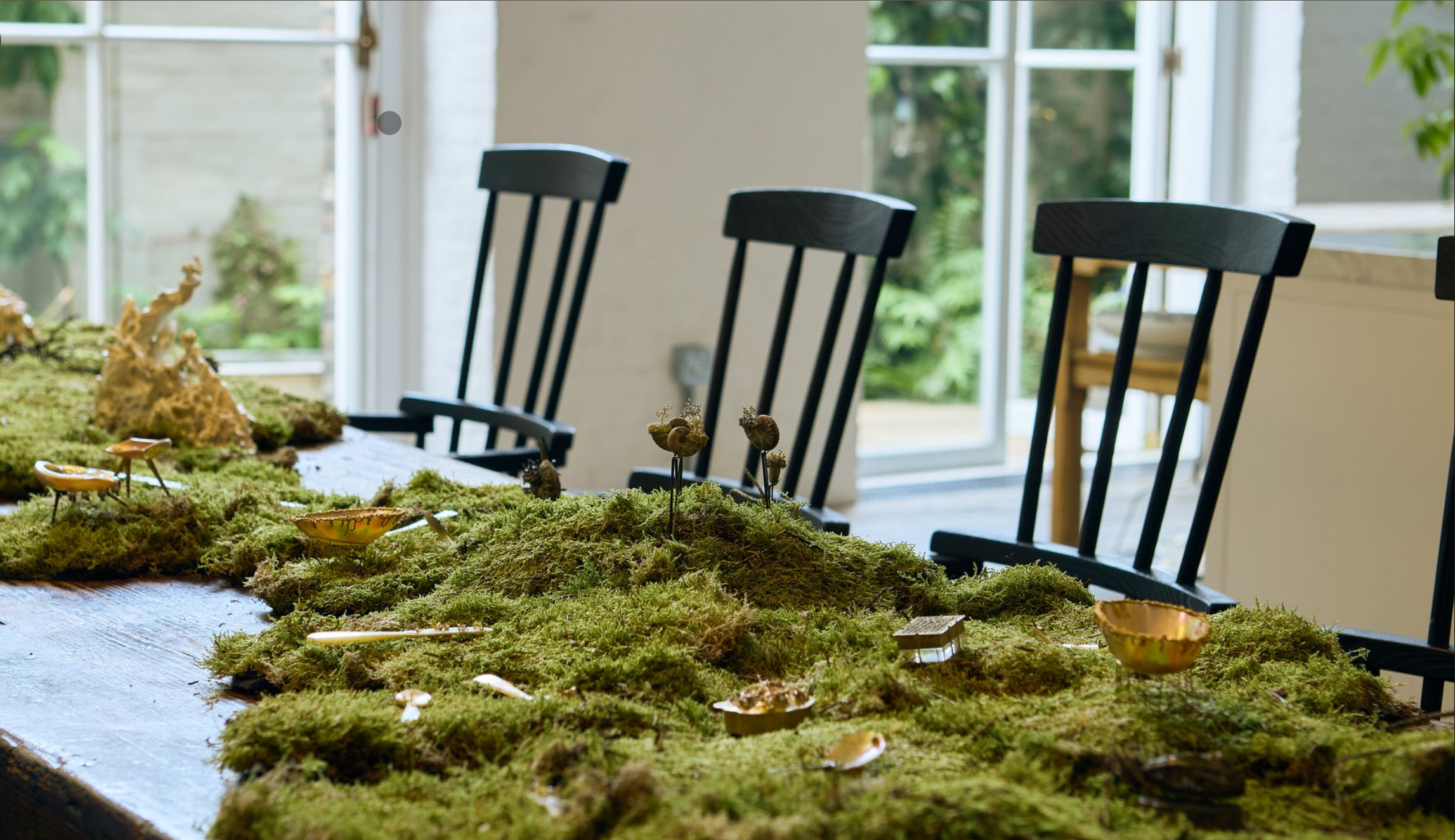
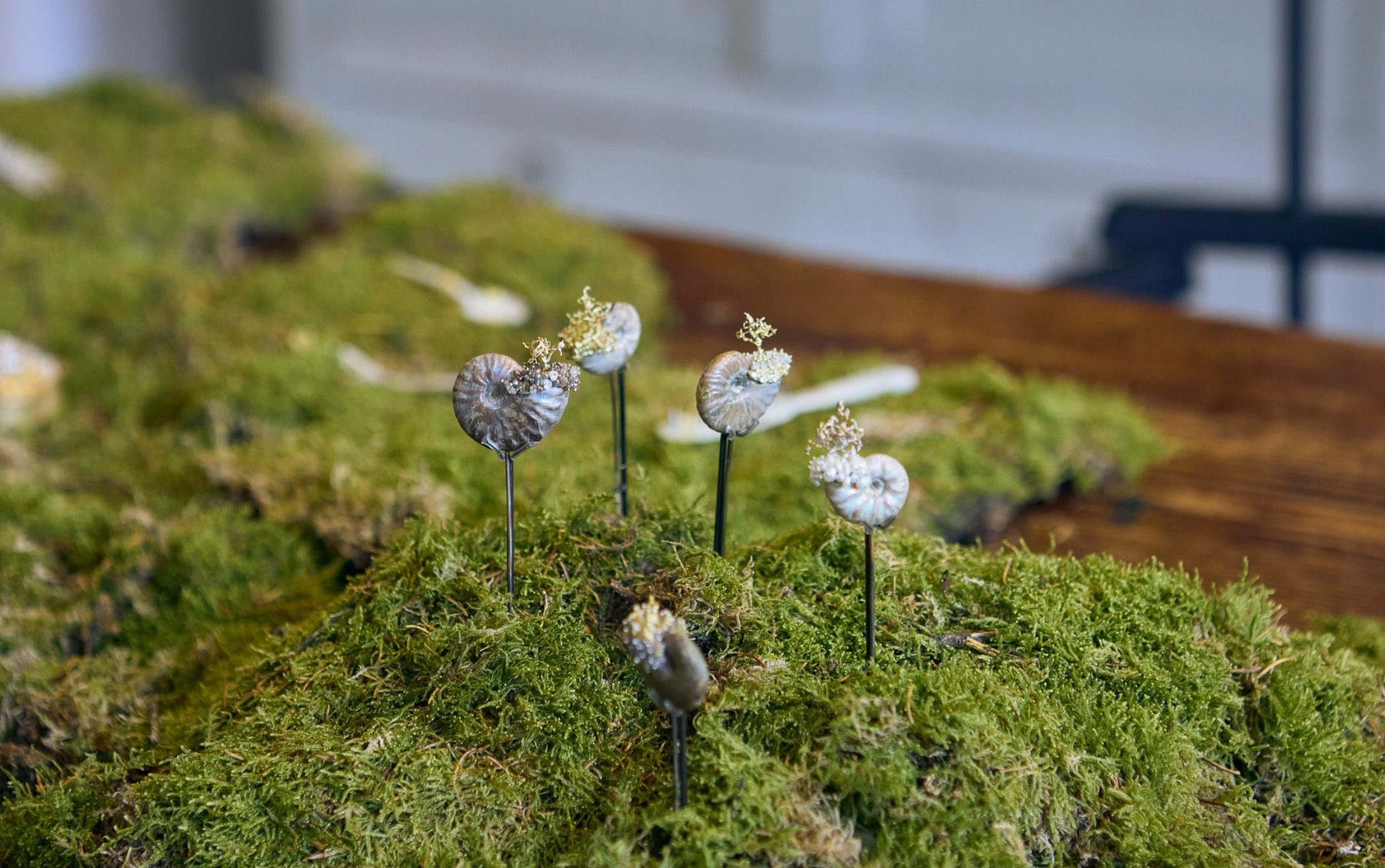
ROMILLY SAUMAREZ SMITH AND HER COLLABORATORS
This is an extraordinary story. One that would be hard to make up.
Thirteen years ago, Romilly Saumarez Smith was diagnosed with a neurological condition that left her paralysed from the neck down. A cruel fate for anyone, but particularly for one who followed a long career as a book binder, and took up jewellery in the late 1990s.
‘I loved to sit up there working’ she said of her Lilliputian workshop on the first floor of her house in Stepney. But for five years, in a state she likens to grieving, “I couldn’t even use my fingers much to feel, it was heartbreaking – I tried not to think about it.”
It was only after listening to a radio programme about the method of loci (meaning places in Latin), a memory system that involves the visual placing of objects within architecture meant to aid recall, that things started to make sense.
‘Because I have a strong visual memory, I found I could design each piece of my jewellery in my head and the image would be very clear. Using the panelled rooms in her home as a memory palace, she was able to visualise up to 29 jewels at a time. Miraculously, she met Anna Wales, Lucy Gledhill and Laura Ngyou, her “creative triumvirate”.
Over the years, they have become her hands. Much like translators, they’ve developed their own lyrical shorthand for techniques.
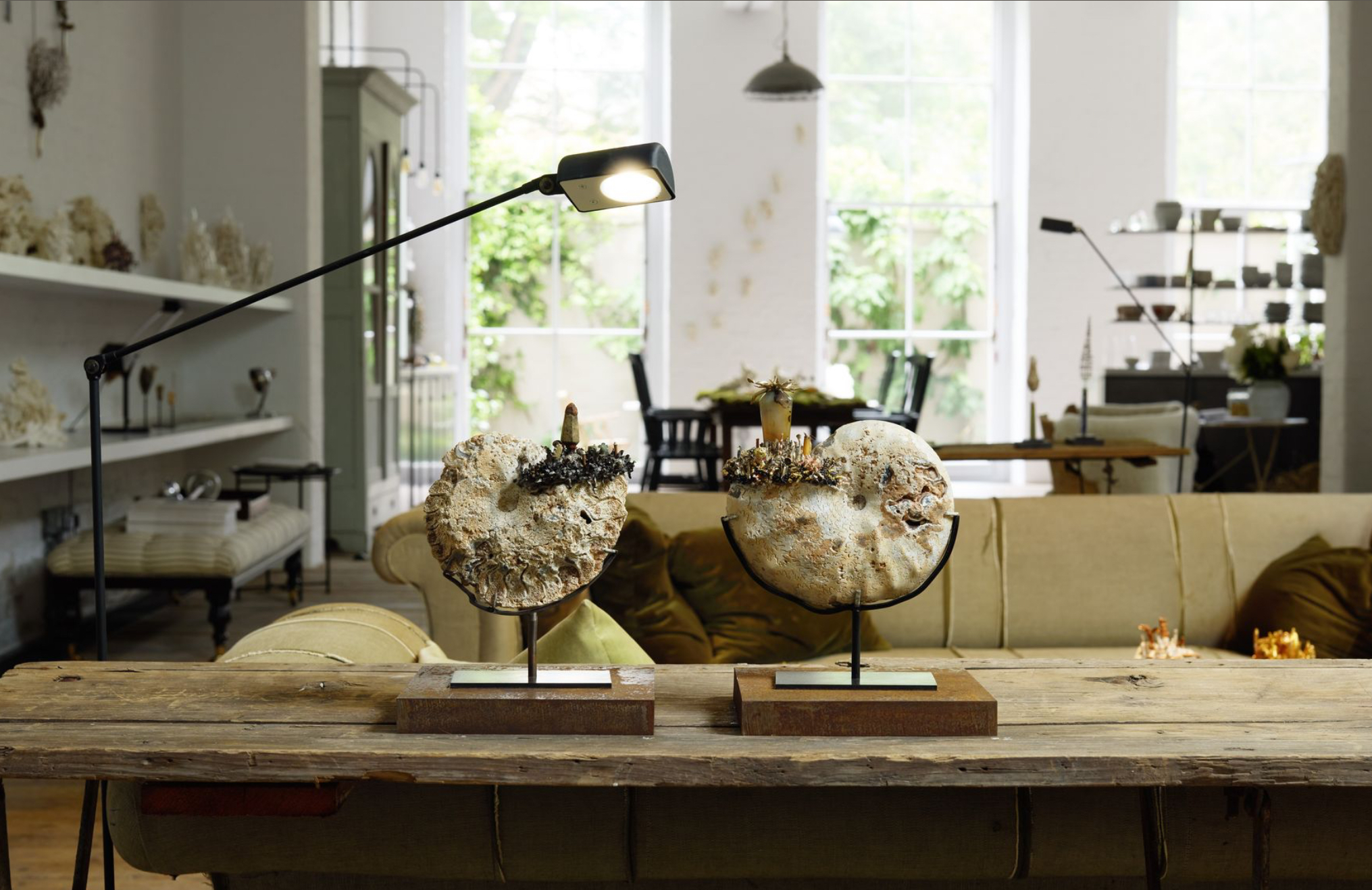
They use terms such as shingles, weeds, unicorns, whisks and sea pods to describe the delicate clusters of stones and beads and hammered pins that animate each aquatic piece. Ideas are typically sketched out from Romilly’s verbal descriptions, but for more complex works, they’ll create cardboard maquettes to more accurately represent her vision.
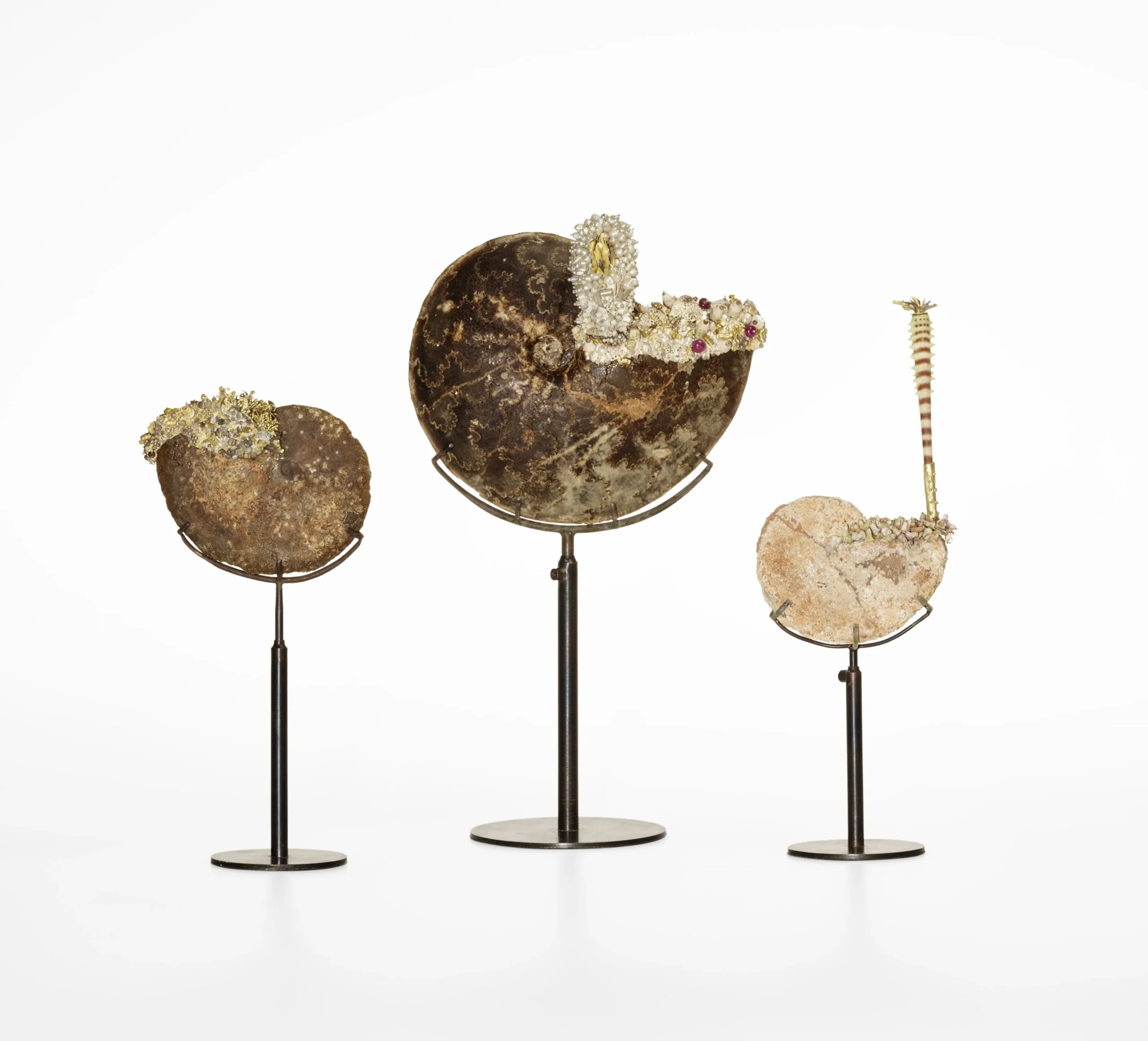
ROMILLY SAUMAREZ SMITH: When Ammonites Ruled, 2025
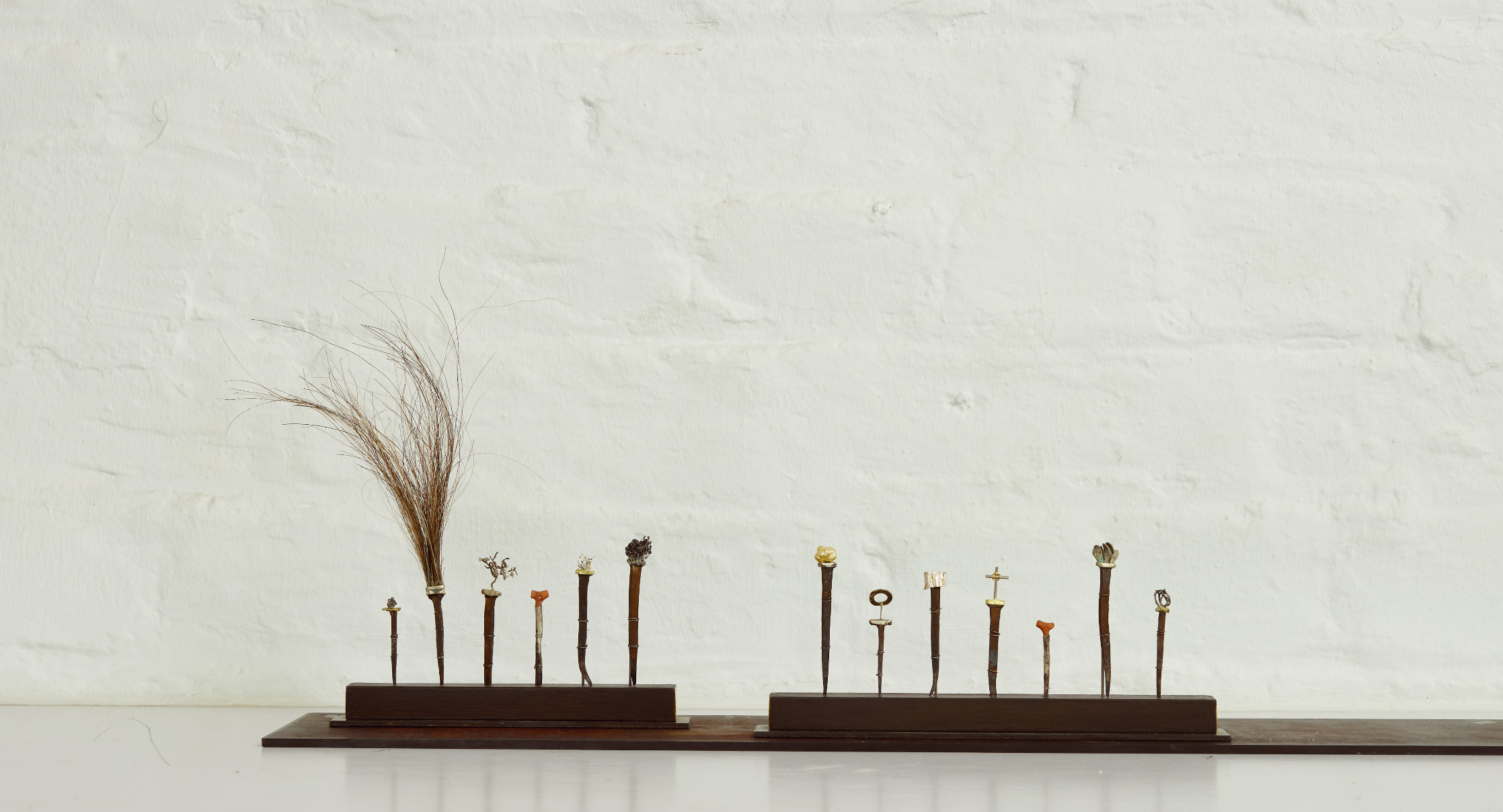
ROMILLY SAUMAREZ SMITH: Old Masters Religious & Landscape, 2025
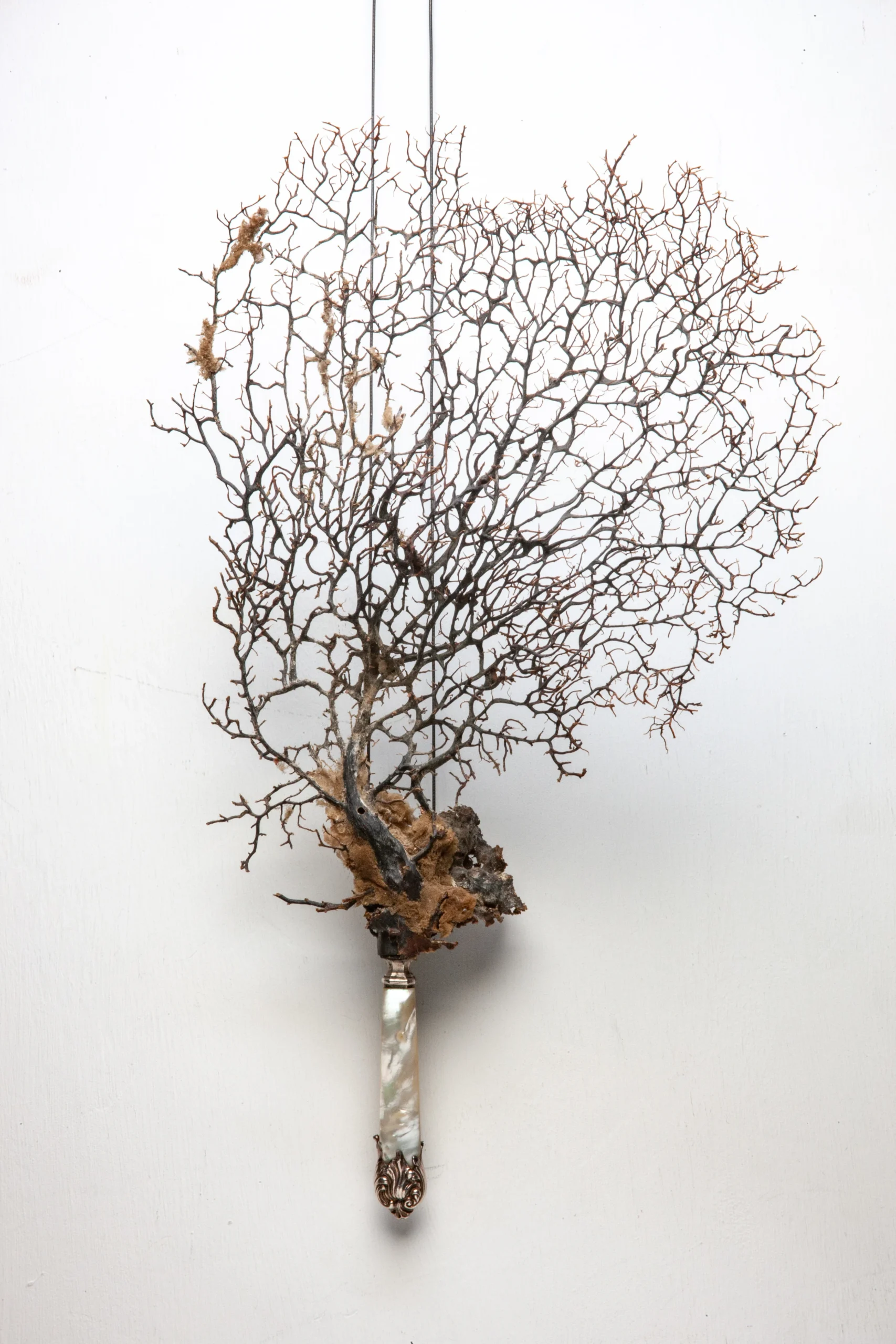
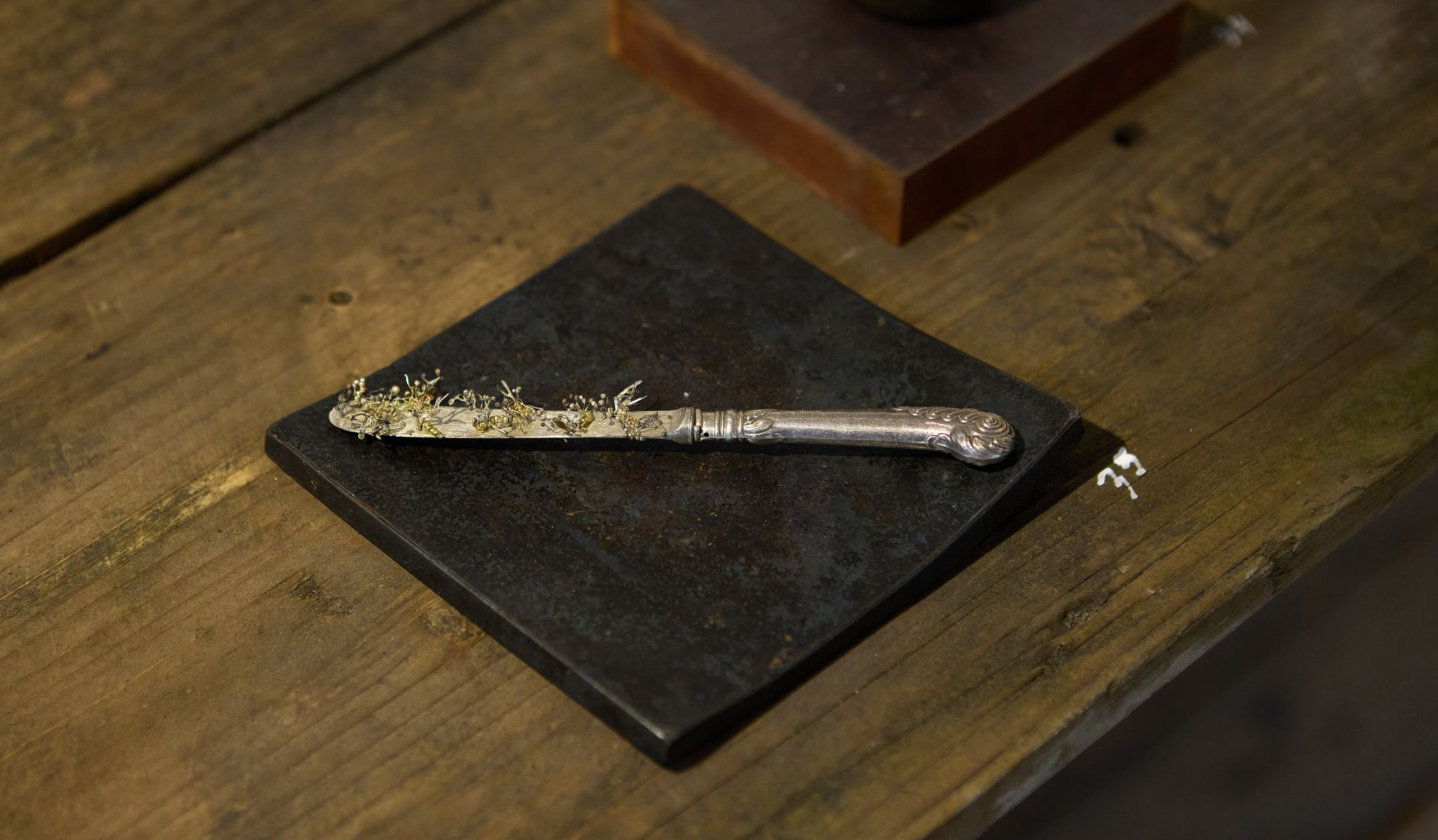
ROMILLY SAUMAREZ SMITH: Seafan Treehandle IV with Mother of Pearl Handle, 2025
She uses metal detecting finds as a starting point. Her first pieces were inspired by a pair of Roman rings she bought as stocking filers for her two sons in 2011. “They were just so beautiful I immediately started thinking about how they could be transformed.” Nowadays she obsessively scours online for the watch winders, thimbles, medieval medial tools and Anglo-Saxon studs that she transforms from historic detritus (the most she has ever spent is £40) into miniature artistic treasures.
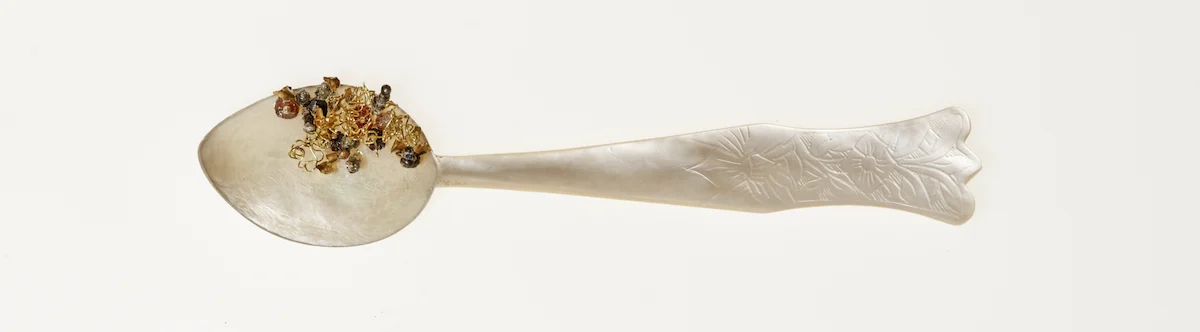
ROMILLY SAUMAREZ SMITH: Mother of Pearl Decorated Spoon IV, 2025
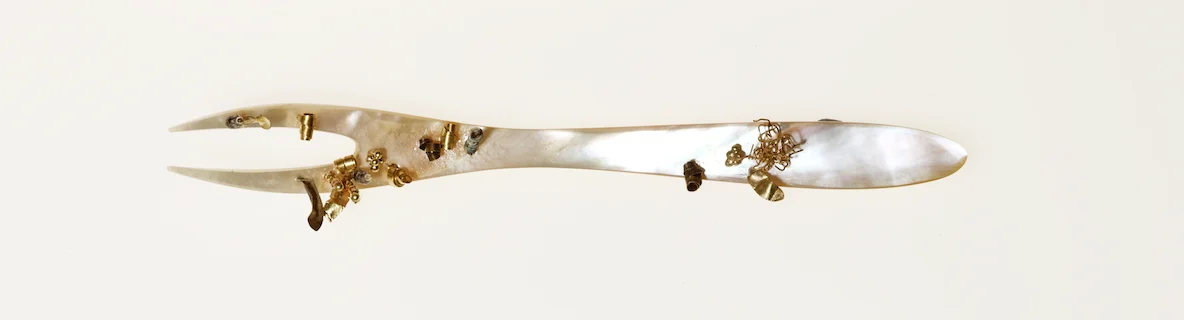
ROMILLY SAUMAREZ SMITH: Mother of Pearl Decorated Fork, 2025
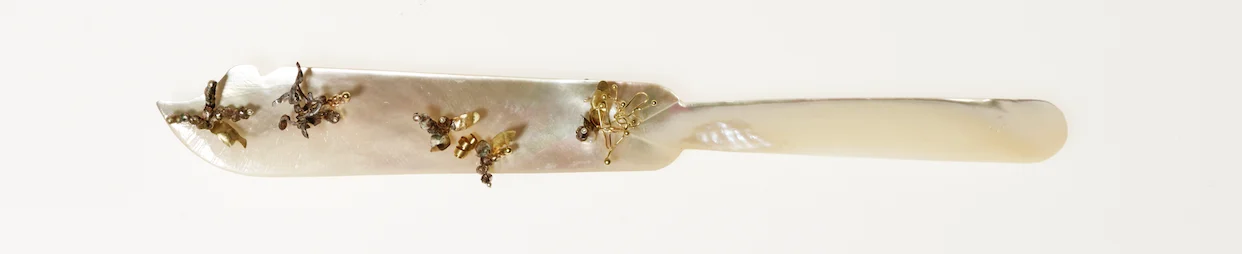
ROMILLY SAUMAREZ SMITH: Mother of Pearl Decorated Knife I, 2025
The delicacy of her work is breathtaking.
As TheEye was leaving and regretting missing Romilly, she saw a smartly dressed woman wrapped in a purple cashmere shawl being wheeled into the studio by her ‘collaborators’ making sure she was comfortable. TheEye recognised her and was able to offer her the congratulation she more than deserved. The compliment was returned with a big, happy smile.
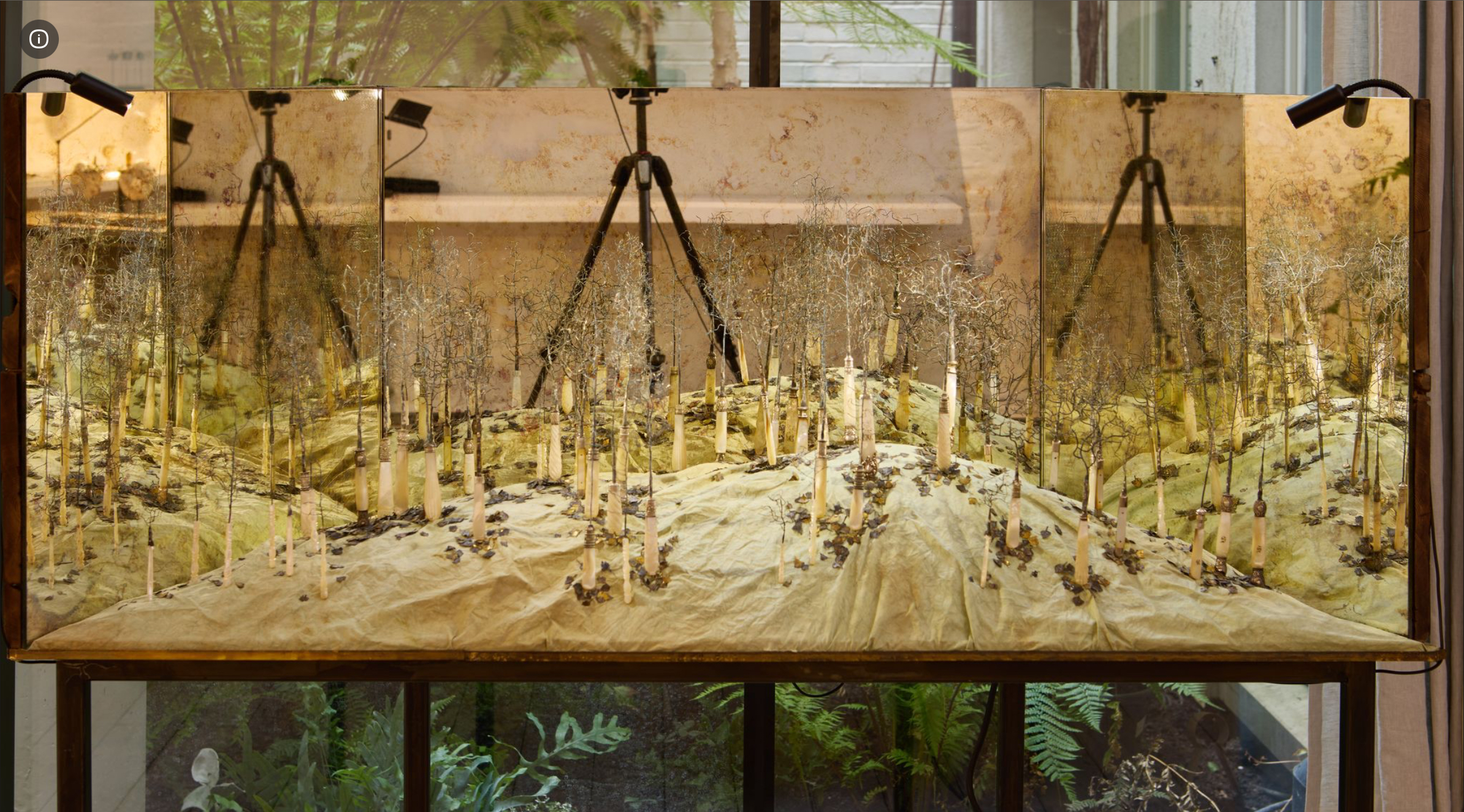
INVISIBLE LANDSCAPES (sadly now over) was a very special exhibition and if you get the opportunity of seeing the work of either artist – GO!
In these troubled times we need joy and optimism.
All images are courtesy of Tristan Hoare Gallery.
Hear, hear to all the above comments. Truly fascinating and wonderful, Jan.
Ruth
Such talented and extraordinary women, thank you for your illuminating blog, beautifully written.
You are so inspiring with your eye and what you write – celebrating the achievements of others.
Once again Janice a very interesting ‘eye’. What wonderful work. Fascinating and beautiful.
Fascinating finds , so creative . You have described these two talents so generously , although they themselves took the brave initiatives . Hats off to them and to you.