
The Season
The London ‘season’ probably kicks off with Frieze Art Fair when art lovers, and their observers, flock to Regent’s Park to view and shop.
Frieze Masters tends to be upscale galeries showing their work and covering a wide number of periods which makes it of particular interest for those (TheEye included) that are quite ignorant when out of their comfort zone.
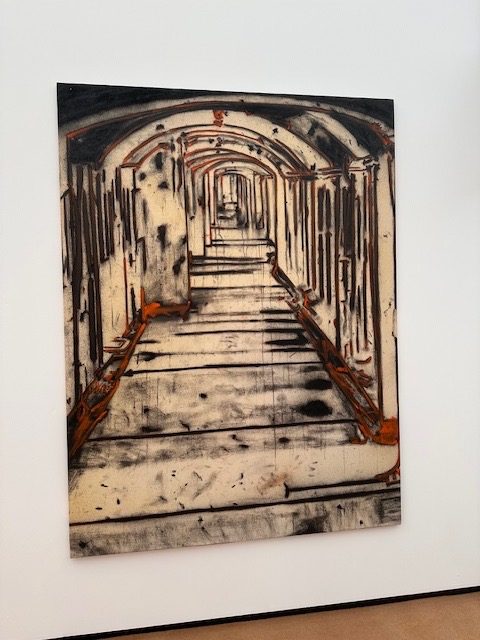
Tony Bevan at BEN BROWN GALLERY
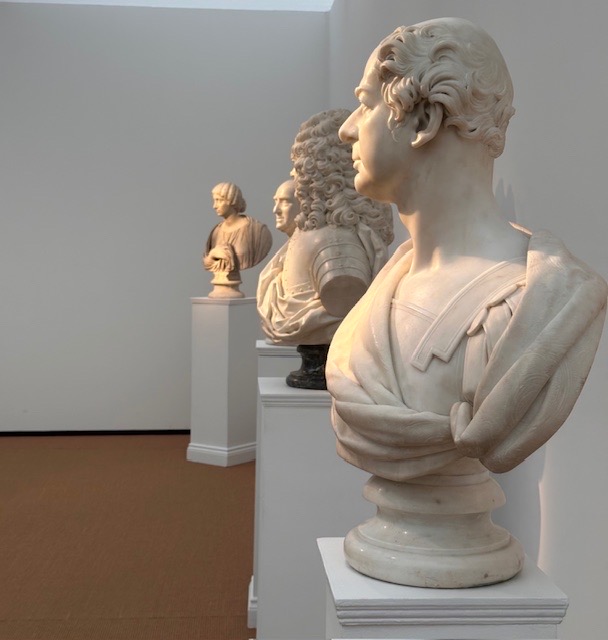
Frieze Masters appeals to a diverse audience — these beautiful ancient busts, for example.
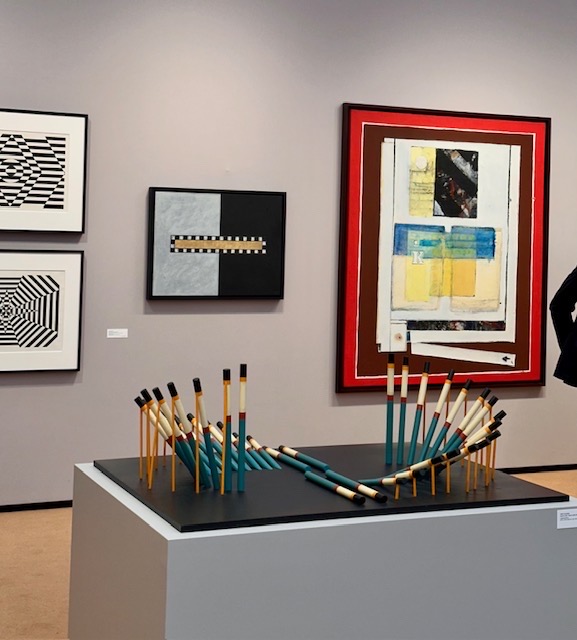
As TheEye wanders up and down the aisles she fantasises she is able to buy anything she wants – a painting, a sculpture, something contemporary or even ancient.
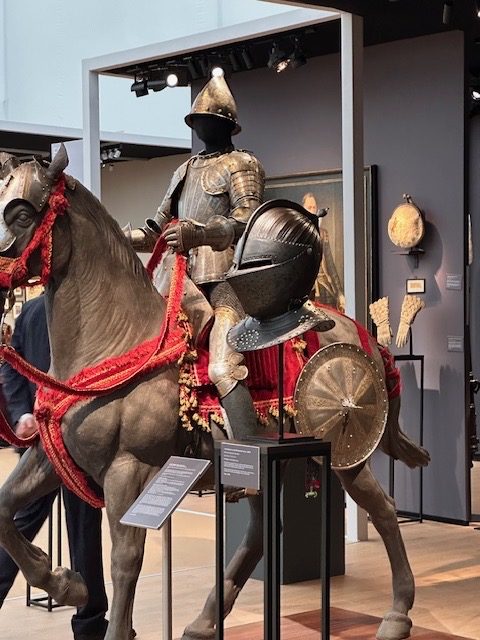
Sadly it won’t fit in my house, but looks impressive if you like this sort of thing. A touch Don Quixote.
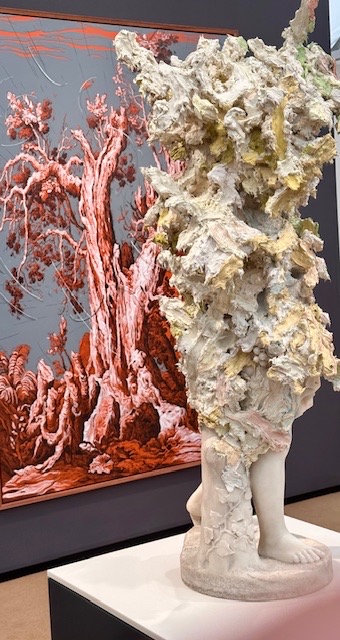
This year it was two highly unusual pieces by Man Ray. First, a chess board table with drawers for the chess pieces. Whether you play chess or not, it was an elegant and functional design and would certainly have a place of honour in TheEye’s home.
Another piece, more of an oddity, also by Man Ray, was less functional, but very appealing to TheEye. A ceramic hand holding an orange. It would make me smile.
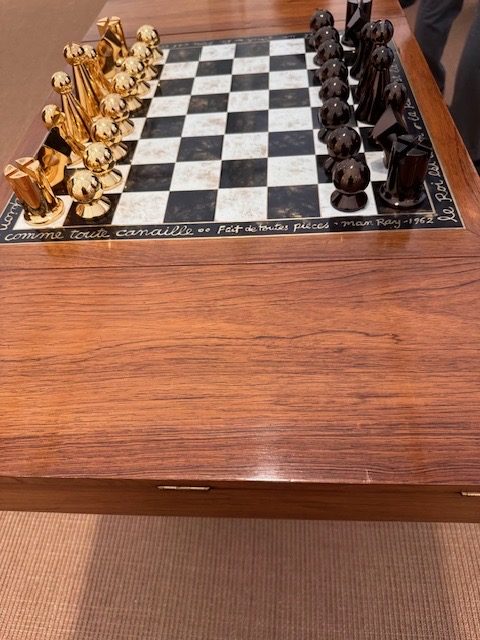
Hand-made chess board by Man Ray
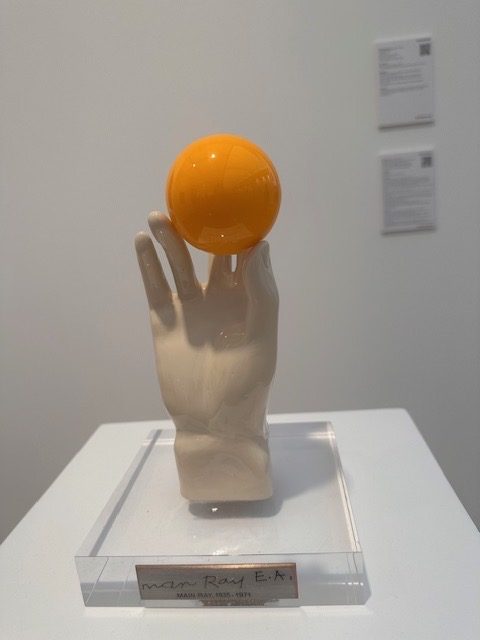
Another Man Ray sculpture TheEye covets – Hand and orange
There were many desirables but pushed to choose (TheEye should be so lucky?) those were the pieces she would be taking away.
Bags are searched by security guards as you exit, so no chance of that.
Frieze Masters is an interesting diverse mix of very ancient and contemporary with specialist items for collectors of books, manuscripts and armoury for example.
Of the contemporary gallerists, Ben Brown‘s stand is always worth taking a good look – a large painting by Tony Bevan, different from his more recognisable intense portraits. TheEye also loved Lalanne‘s flock of sheep wandering on a ‘green lawn’ carpet.
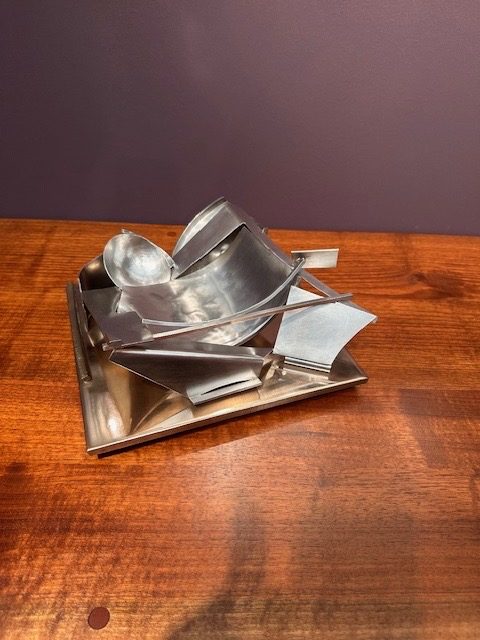
OFFER WATERMAN is one of TheEye’s favourite galleries and has, in her opinion, one of the best stands at the Fair and TheEye makes a bee line there straight away. He shows quality work which included an unusual Antony Caro sculpture fabricated in steel and silver, and a striking Odundo vessel, and Kenneth Armitage.
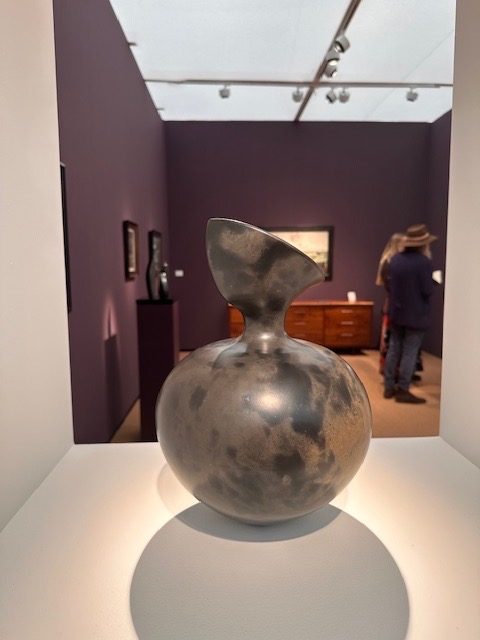
Magdalene Odundo vessel, strikingly almost architectural
Offer Waterman
Looking at art makes TheEye hungry and thinking ahead she had reserved a table at NOBU which was fortunate as the line around the reception desk had people clamouring for tables.
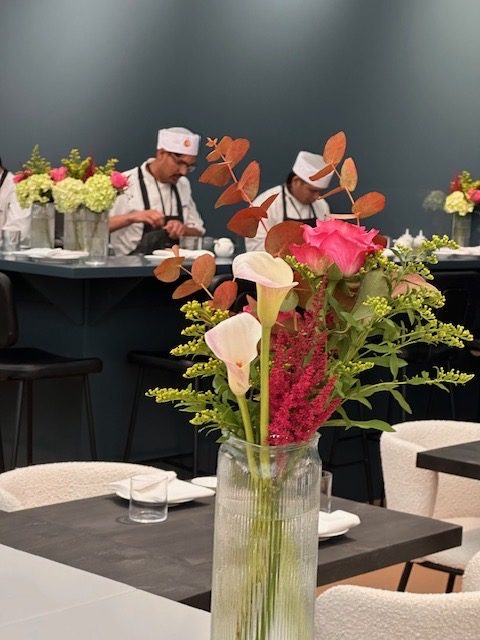
The sushi chefs preparing the food came from The Nobu Hotel in London.
All delicious and it was also a relief to rest our legs.
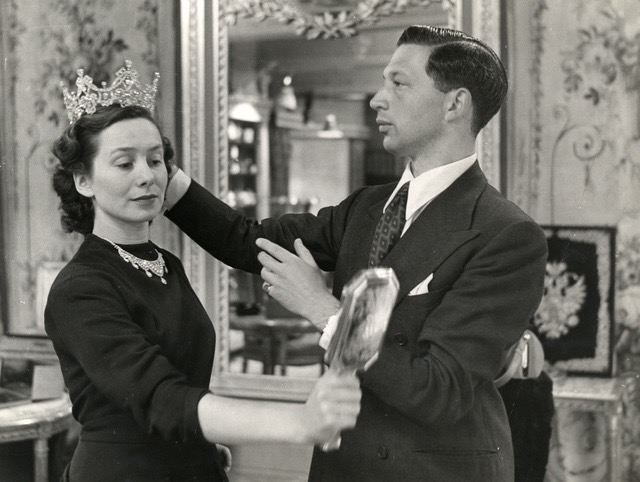
Kenneth Snowman trying a tiara on a favourite client and friend in 1953 the year of the late Queen’s coronation
‘FROM FUNCTION TO FANTASY: THE BROOCH FROM 1200 TO THE CONTEMPORARY’

Of all the shows and exhibitions TheEye has seen in the last few weeks it was the jewellers’ WARTSKI in St James that opened her eyes with wonder.
Morris Wartski, the founder of the company, was an immigrant from Poland at the turn of the last century. Settling in Bangor, North Wales, he started as a street peddler and then opened a modest jewellery shop in the town before moving to nearby Llandudno, then a fashionable seaside town with wealthy visitors. The shops prospered and in 1911 his son in law Emanuel Snowman opened a branch in London called Wartski of Llandudno.
Following the Russian Revolution, Snowman was instrumental in acquiring significant Faberge objects from the Soviet Government including Imperial Easter Eggs.
As a a result, the London branch became known for buying and selling Fabergé. Emanuel’s son Kenneth Snowman added a scholarly dimension writing and publishing numerous books on Fabergé.
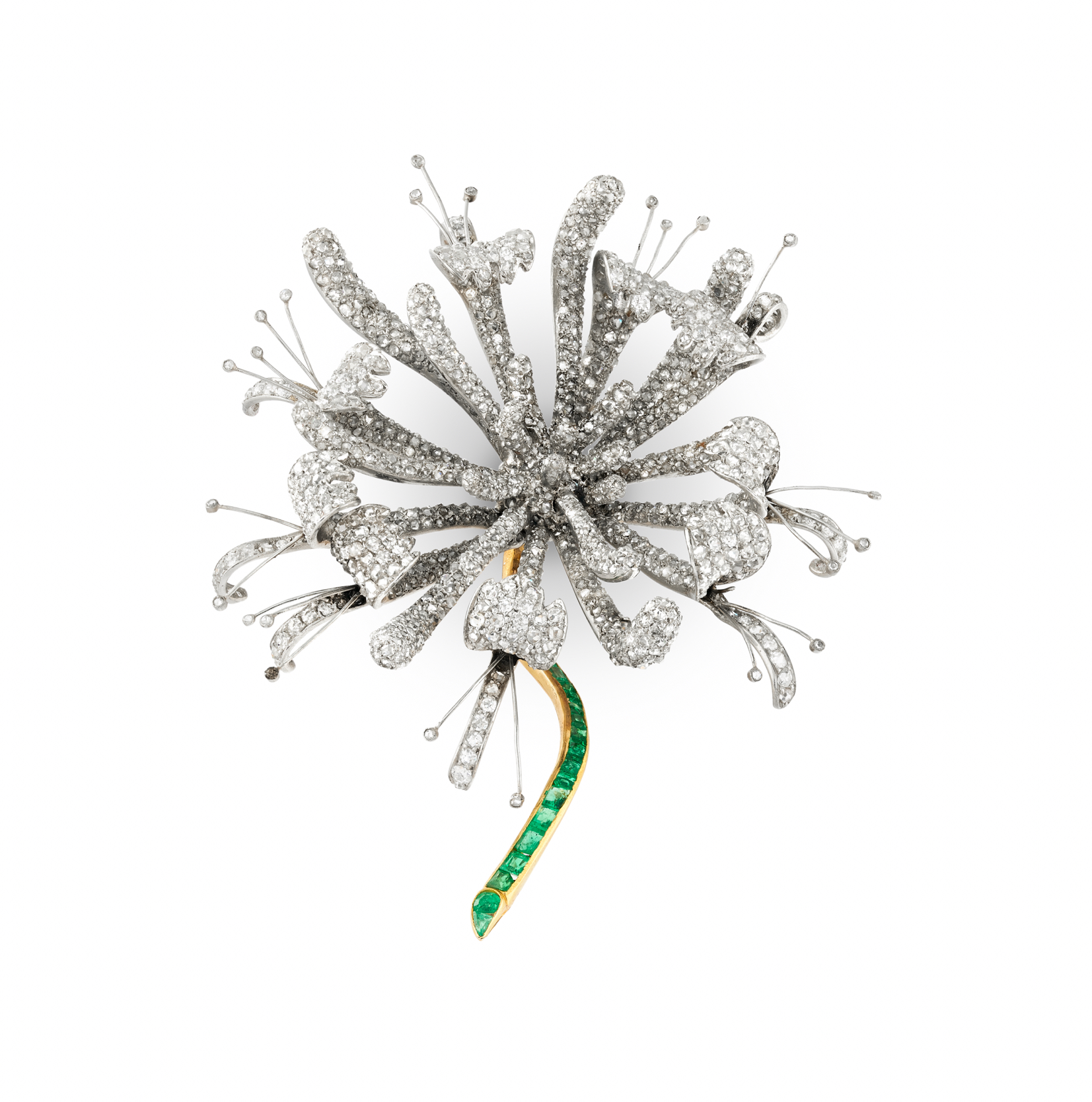
A brooch composed as honeysuckle, the curled petals pavé-set with diamonds, the stem of gold mounted emeralds, the delicate platinum stamens each terminated with a diamond. English, c.1900.
In 1911, Emanuel Snowman married Morris Wartski’s daughter and in 1911 opened a third branch of Wartski in London (keeping the name, Wartski of Llandudno.)
Snowman was one of the pioneering few who made purchases from the Soviet Government between 1927 and 1933. These included numerous masterpieces by Carl Fabergé including several of the Imperial Easter Eggs.
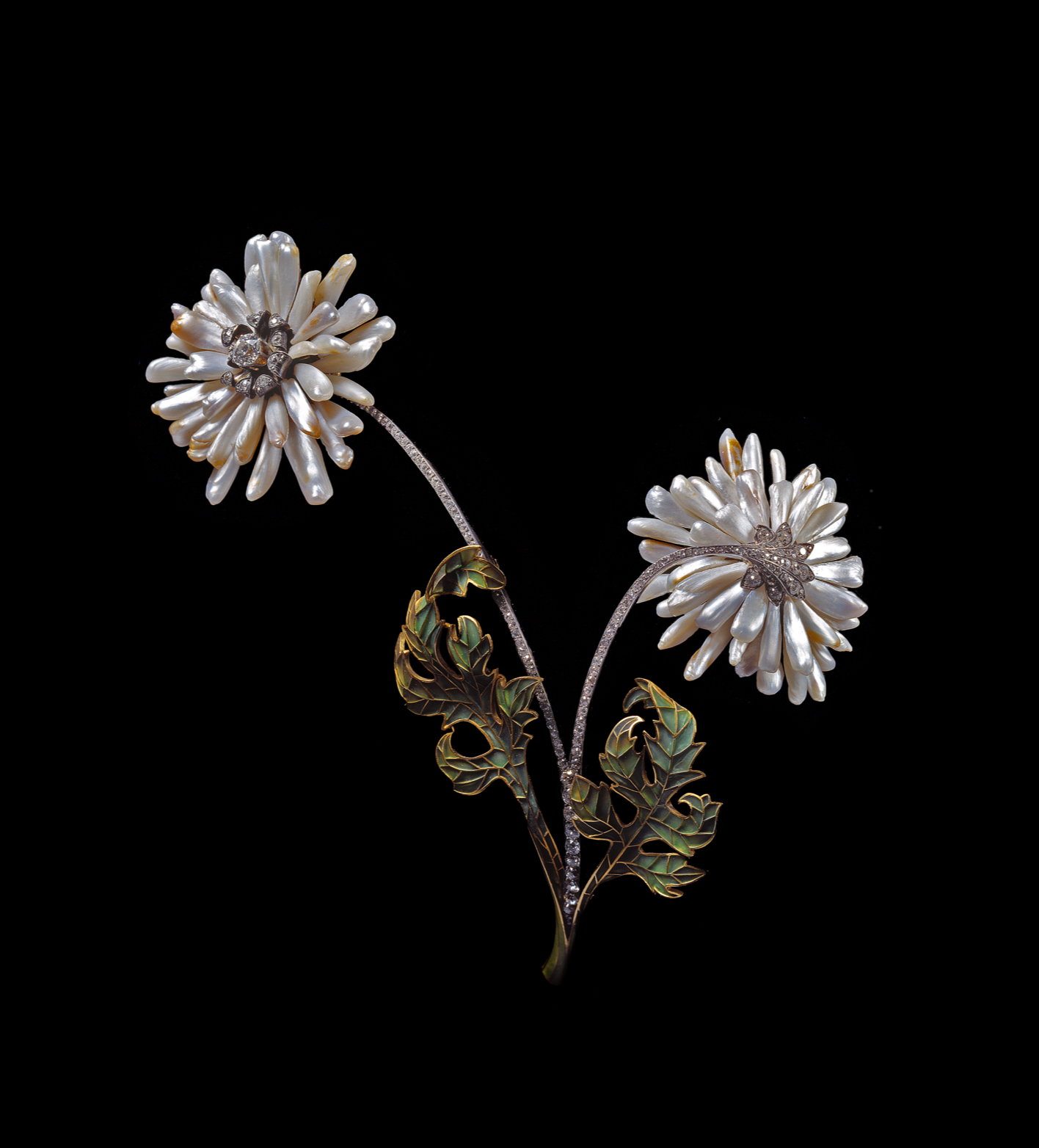
A gold and silver mounted baroque pearl and diamond brooch by Vever, the leaves decorated with plique-à-jour enamel. Paris, circa 1900. © Faerber-Collection/K. Faerber.
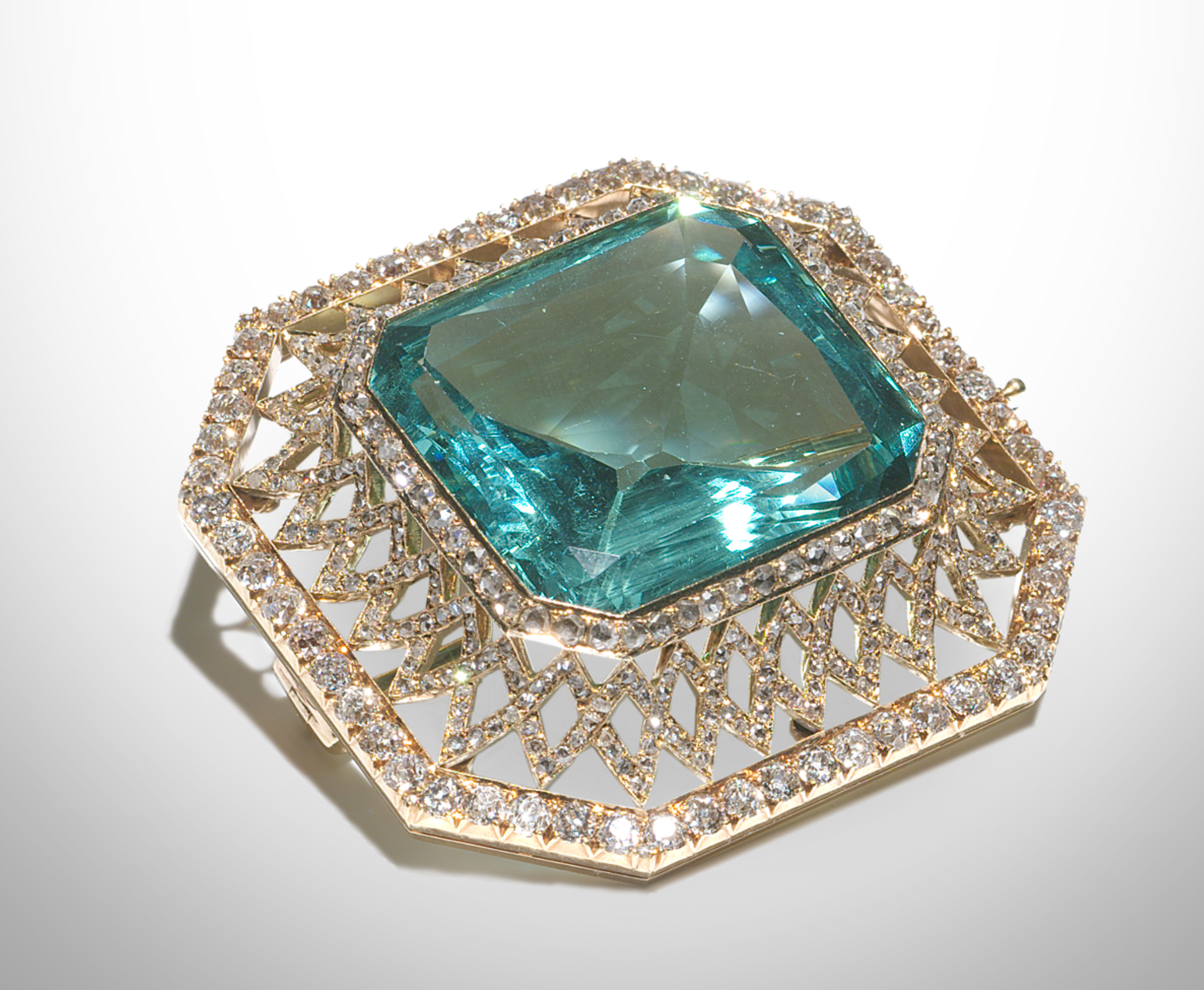
An Imperial gold mounted aquamarine and diamond-set brooch by Carl Fabergé, circa.1894. Private collection.
Moving forward, curator and director of Wartski, Katherine Purcell, had been working on the exhibition for approaching 4 years acquiring loans of many rare brooches from museums and private collections.
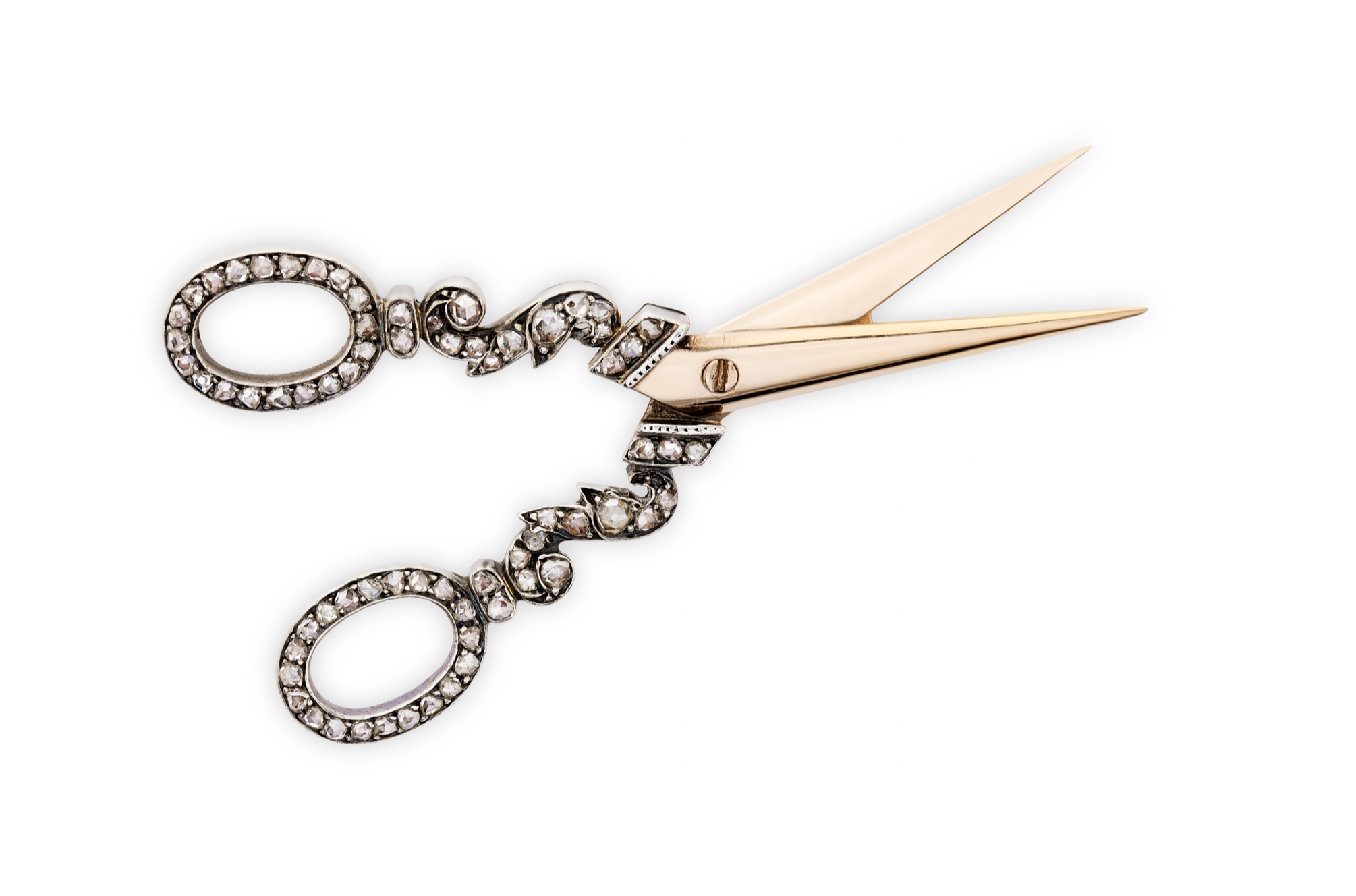
A brooch in the form of a pair of diamond mounted articulated scissors. English, circa 1900.
The exhibition was only on for 12 days as the rare exhibits needed to be returned and, on a practical level, there was no Wartski business going on whilst the Brooches were on display.
PAD
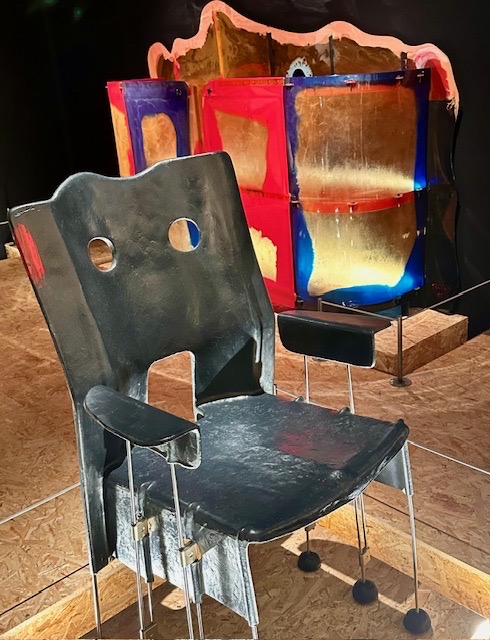
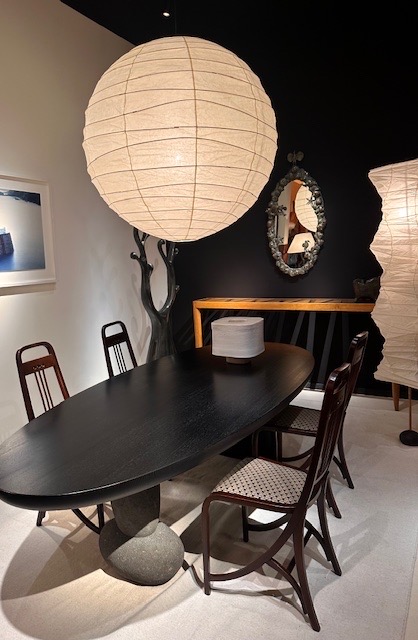
TheEye has been going to PAD for many years and, indeed, was one of the selector panellists for some of the time. This year she went as ‘a member of the public’ and again…she had her shoppers eye on rather than her more critical judge’s hat. Much more fun to wander around selecting for herself than making democratic decisions with others panellists.
PAD was started by Parisian antique dealer PATRICK PERRIN with major exhibitions in Paris and London which are renowned for exhibiting work including art, antiques and furniture. All of the highest connoisseurship.
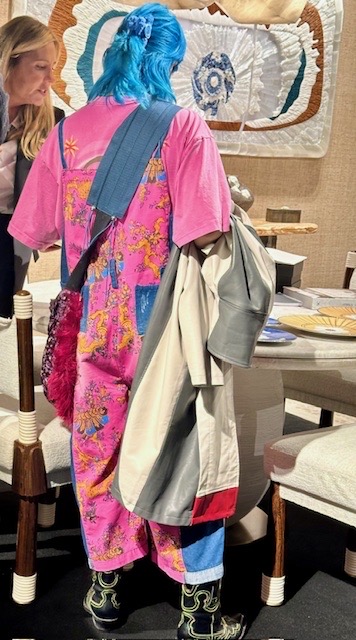
Is she an artwork or a customer? Maybe both.
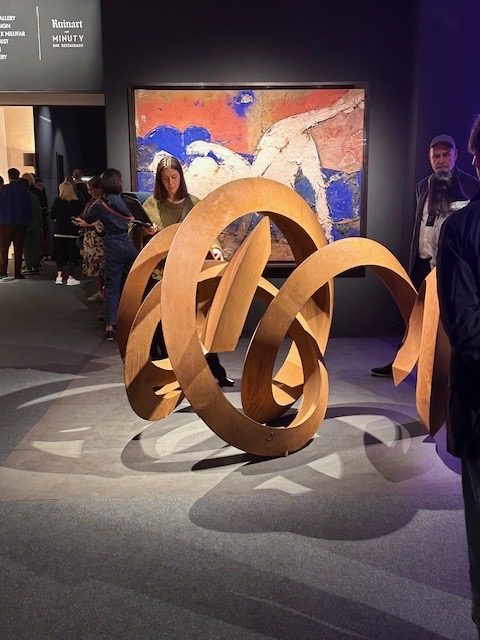
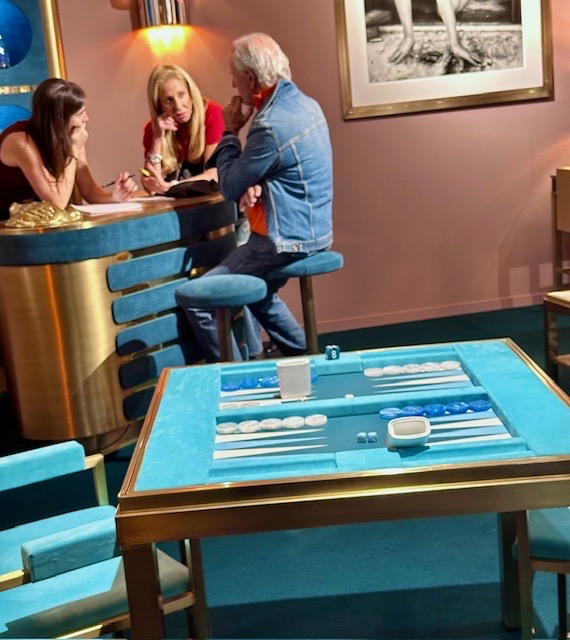
Of the stands, Sarah Myerscough always comes up trumps and this year was no exception.
Mayumi Onagi combines natural lacquer with linen wool and water for her deceptively simple, sculptural vessels. Adrian Sassoon was showing some tall decorative pots by Felicity Aylieff made by her in Jinigdezhen, China.
French galleries have always had a strong presence. 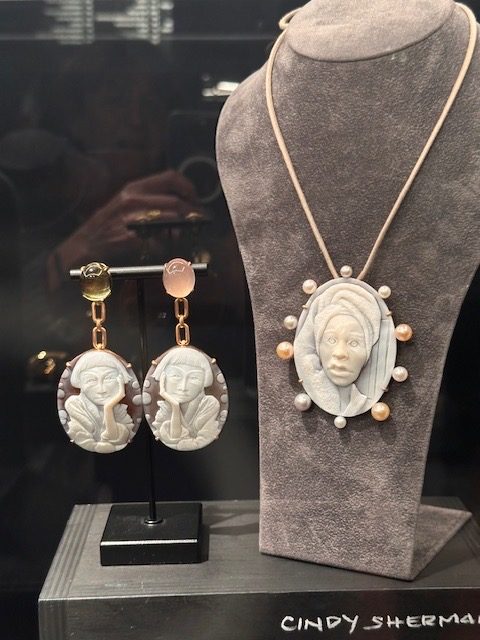
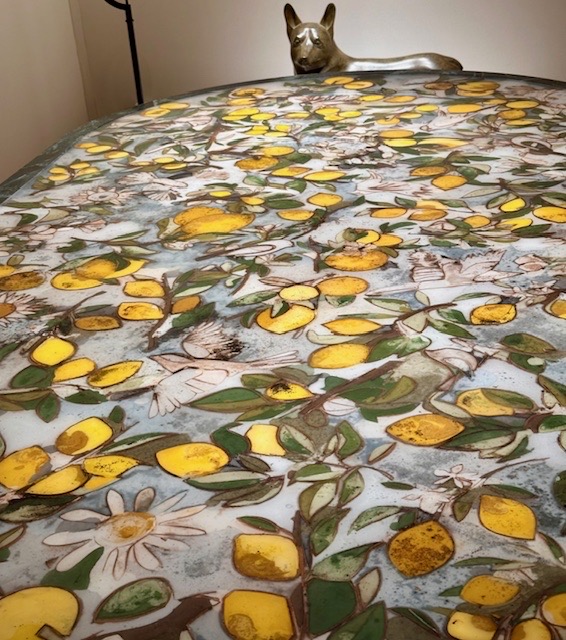
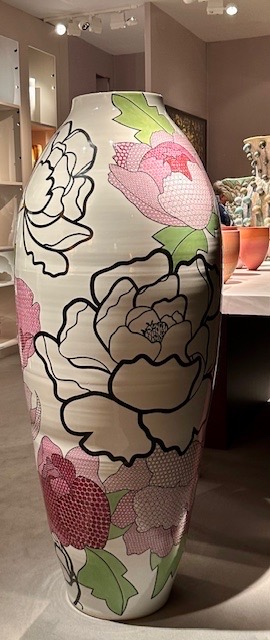
ADRIAN SASSOON
FELICITY AYLEFF
‘MUSCLE MEMORY-THE BODY DOES NOT FORGET’ — LEOPOLDO GOÛT
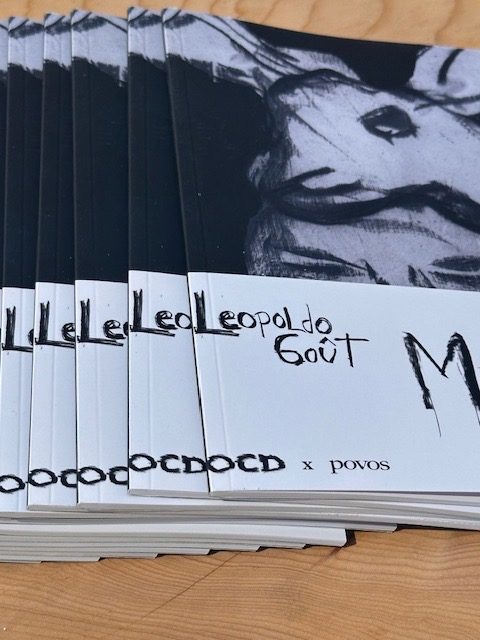
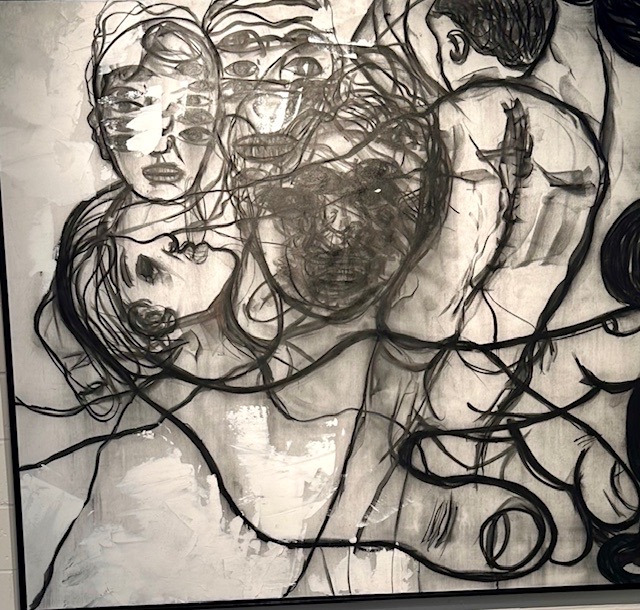
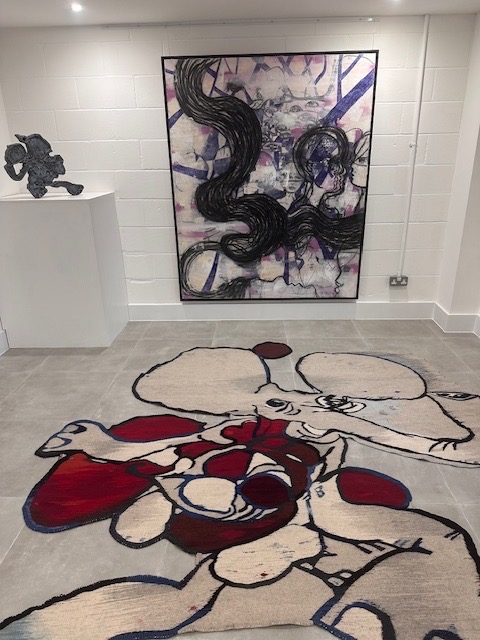
LEOPOLDO is a multi disciplinary Mexican artist working in numerous materials – a painter, sculptor, weaver and musician. The Oaxaca Tapestries he regards as a threshold between sculpture and painting – anchored in Oaxaca where he started to collaborate with the Ruiz Mendoza family.
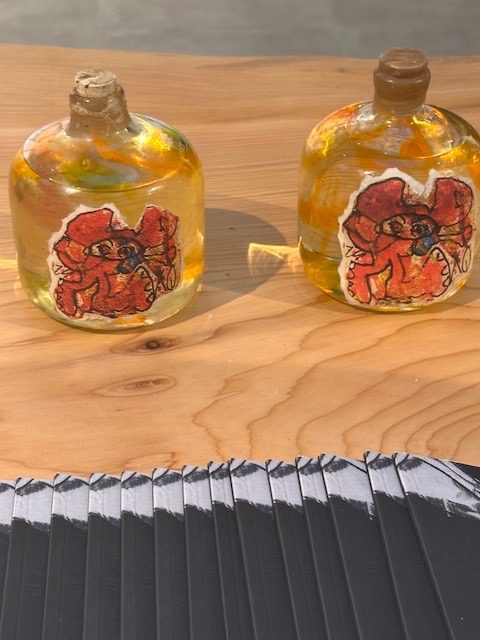
Hand made and painted bottles for Mescall
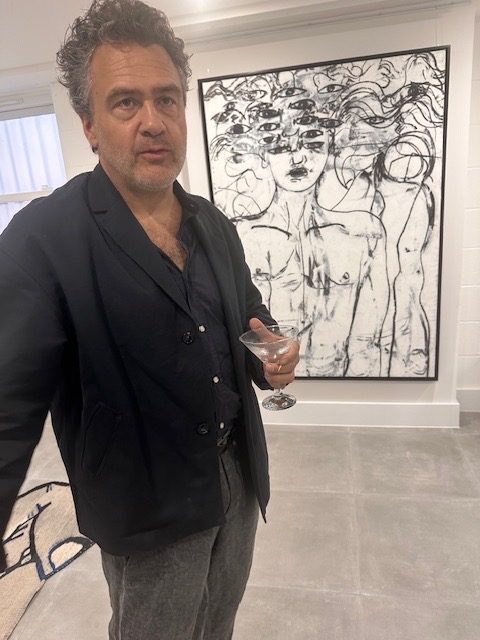
The artist himself
What started as following the tradition of weaving later expanded into weaving as cosmology and involved years of travelling across Mexico studying ancestral techniques. Colour is important, the vibrancy of orange for example. After all, Goût is Mexican through and through, and colour is in the DNA of most Mexicans.
An A – Z OF LINGUISTIC CURIOSITIES: ‘THE LANGUAGE LOVERS LEXIPEDIA’
Another highlight of this fascinating book, in a wonderfully well-stocked bookshop in Queens Park: The Queens Park Book Shop.
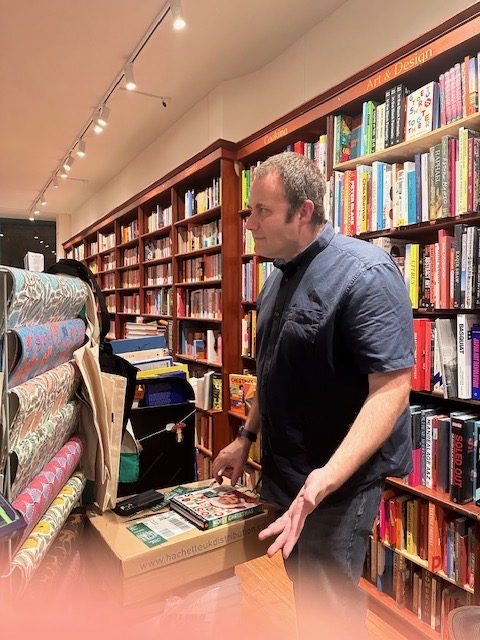
As well as many entries being hilariously funny, you will learn some esoteric information that will serve you well in the kind of company that thinks they know it all. You might ask a ‘know it all’ friend when World Hello Day falls each year or to name some ‘eponymous effects’. Well, they might, BUT, with the help of this literary masterpiece see who comes out t0p of the class!
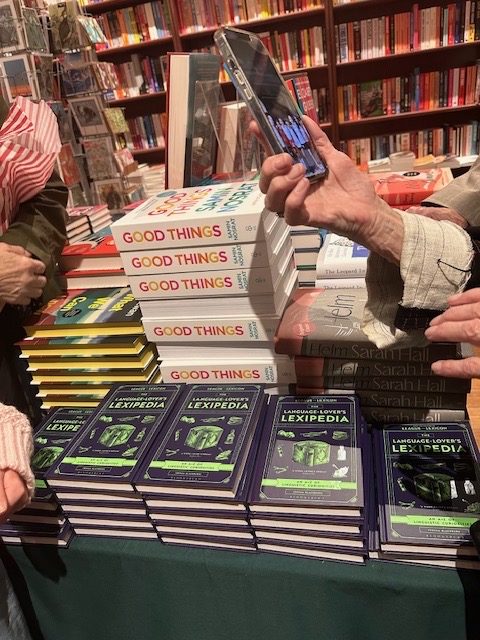
As they say in the movies, for TheEye this is a ‘wrap’ but in reality the season is only just getting started—so keep your eyes glued.
And by the way, reports of the BALL PINK GALA AT THE BRITISH MUSEUM SOUNDED A FANTASTIC SUCCESS.
Guests really rose to the occasion, jewels sparkelled and clothes were breathtaking as were the flowers and the food.
Eat your heart out NEW YORK, the MET BALL has been challenged!
Always wonderful pictures,and you captured the events brilliantly.
You’ve highlighted the very exhibitions I was also lucky enough to visit and having the opportunity to see pictures of many of the objects I admired, is wonderful. Thank you. We like the same things!
I’ve never been, but your report makes me determined to go next year. Thank you,
Rxx